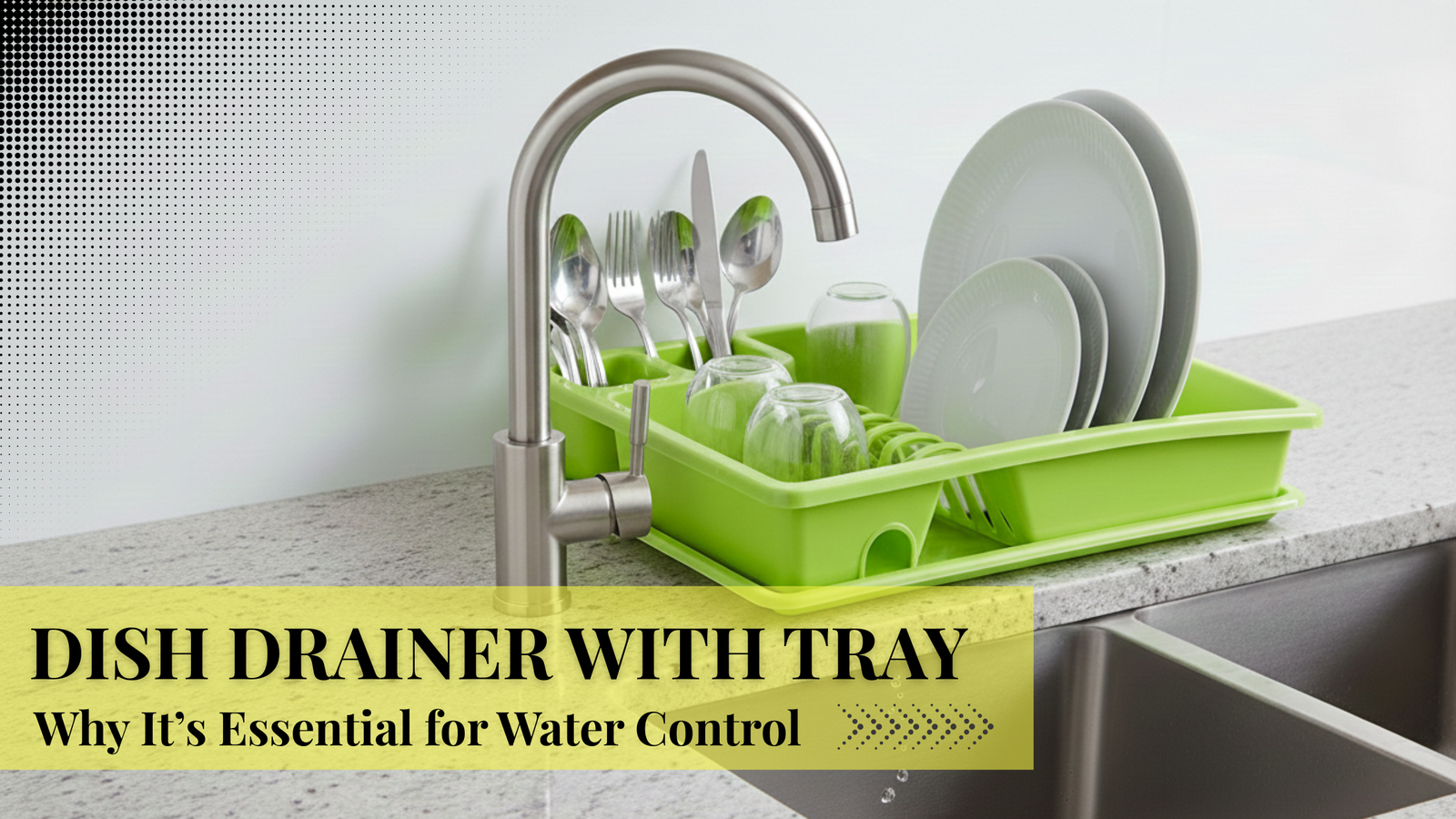
Dish Drainer with Tray: Why It’s Essential for Water Control
Introduction
A dish drainer with tray plays a critical role in effective water control in UK kitchens by preventing pooling, protecting worktops, and supporting faster, more hygienic drying. Unlike basic racks, models with integrated drip trays actively direct excess water away from dishes and surrounding surfaces, helping to minimise moisture damage and bacterial growth.
In the UK, where compact kitchens and laminate worktops are especially common, unmanaged water exposure can quickly lead to swelling, surface deterioration, and mould risk. According to the NHS, damp indoor environments can contribute to mould growth, which may negatively impact respiratory health. As a result, proper drainage solutions are increasingly important for maintaining both hygiene and long-term kitchen durability.
For households seeking a practical, low-maintenance upgrade, selecting the right dish drainer with tray—particularly one with an efficient drip tray and anti-slip base—offers clear benefits in cleanliness, usability, and surface protection.
Quick Answer: Key Takeaways
-
A dish drainer with tray collects and redirects excess water to prevent worktop damage.
-
A removable drip tray makes cleaning easier and reduces stagnant moisture.
-
An anti-slip base improves stability on smooth UK countertops.
-
Effective drainage supports better hygiene by limiting moisture buildup.
-
Compact designs are ideal for small UK kitchens with limited counter space.
What Is a Dish Drainer with Tray?
A dish drainer with tray is a drying rack system designed to manage water runoff efficiently. Typically, it includes:
-
A structured rack for plates, bowls, and cutlery
-
An integrated or removable drip tray beneath the rack
-
An anti-slip base for added stability
Depending on the design, the tray either temporarily stores excess water or channels it back into the sink, preventing direct contact with worktops.
For a detailed comparison of materials and durability, see our Plastic Dishdrainers Guide.
Why Is the Drip Tray Important?
Without a drip tray, water drains directly onto kitchen surfaces. Over time, this can result in:
-
Damage to laminate worktops
-
Staining on wooden counters
-
Increased mould growth
-
Slip hazards around sink areas
UK housing guidance increasingly highlights moisture control as a key factor in preventing damp and mould, as outlined by the UK Government.
How Does a Dish Drainer with Tray Improve Water Control?
Water control is achieved through three main mechanisms:
1. Controlled Drainage
Firstly, sloped drip trays guide water efficiently toward the sink.
2. Surface Protection
Additionally, controlled run off prevents prolonged moisture exposure on vulnerable surfaces.
3. Improved Airflow
Finally, elevated rack designs allow better air circulation, speeding up drying time.
According to guidance from the Food Standards Agency, keeping food preparation surfaces dry is essential for reducing bacterial contamination.
Types of Dish Drainers with Tray (UK Market Comparison)
| Type | Best For | Pros | Cons | Approx. UK Price |
|---|---|---|---|---|
| Plastic Dish Drainer | Budget homes | Lightweight, easy to clean | Less durable | £8–£20 |
| Stainless Steel Rack | Modern kitchens | Rust-resistant, durable | Higher cost | £20–£45 |
| Two-Tier Drainer | Large households | High capacity | Requires more space | £25–£50 |
| Compact Slimline | Small flats | Space-saving | Limited capacity | £10–£25 |
What Features Should You Look For?
When selecting a dish drainer with tray in the UK, prioritise the following:
✔ Removable Drip Tray
Allows easy cleaning and prevents stagnant water.
✔ Anti-Slip Base
Rubberised feet provide stability on laminate, quartz, or stone counters.
✔ Rust-Resistant Materials
Especially important in humid UK kitchens.
✔ Correct Size
Always measure available counter space before purchasing.
For more organisation tips, explore:
Considerations for UK Homeowners
Due to the UK’s damp climate, kitchens often experience slower drying times. Homes with limited ventilation may therefore face:
-
Higher indoor humidity
-
Prolonged moisture on surfaces
-
Increased mould risk
Moreover, in compact UK flats where counter space is limited, slim dish drainers with trays offer an effective balance between capacity and footprint. This is particularly important for laminate and engineered wood worktops, which are more susceptible to water swelling.
Pros and Cons of Using a Dish Drainer with Tray
Pros
-
Protects worktops from water damage
-
Improves kitchen hygiene
-
Keeps drying organised
-
Affordable and widely available
Cons
-
Requires periodic tray emptying
-
Uses counter space
-
Plastic models may degrade over time
Overall, the benefits clearly outweigh the limitations for most UK households.
Maintenance Tips for Long-Term Performance
To maintain hygiene and extend lifespan:
-
Empty and rinse the drip tray daily
-
Clean weekly with warm soapy water
-
Dry thoroughly before reinserting
-
Inspect anti-slip feet periodically
These steps align with UK hygiene best practices.
Frequently Asked Questions (FAQs)
1. Is a dish drainer with tray better than a basic drying rack?
Yes. Integrated drip trays prevent water pooling and protect worktops, making them more suitable for UK kitchens.
2. How often should the drip tray be cleaned?
At least once per week, or more often in high-use households.
3. Are plastic dish drainers durable?
Quality plastic models can last several years with proper care, although stainless steel typically lasts longer.
4. Do I need an anti-slip base?
Yes. Smooth UK worktops benefit from added grip and stability.
5. Can a dish drainer with tray prevent mould?
It significantly reduces risk by preventing standing water, although good ventilation remains important.
6. What size dish drainer is best for small UK kitchens?
Compact or slimline models work best. Always measure your counter space.
7. Are stainless steel drainers rust-proof?
Most are rust-resistant rather than fully rust-proof. Coated finishes provide better longevity.
Final Thoughts
A well-designed dish drainer with tray is a simple yet highly effective solution for water control in UK kitchens. By combining a reliable drip tray with a stable anti-slip base, homeowners can protect worktops, improve hygiene, and maintain an organised drying space.
For expert comparisons and practical kitchen organisation advice, explore the full range of guides available at Buzztrove.