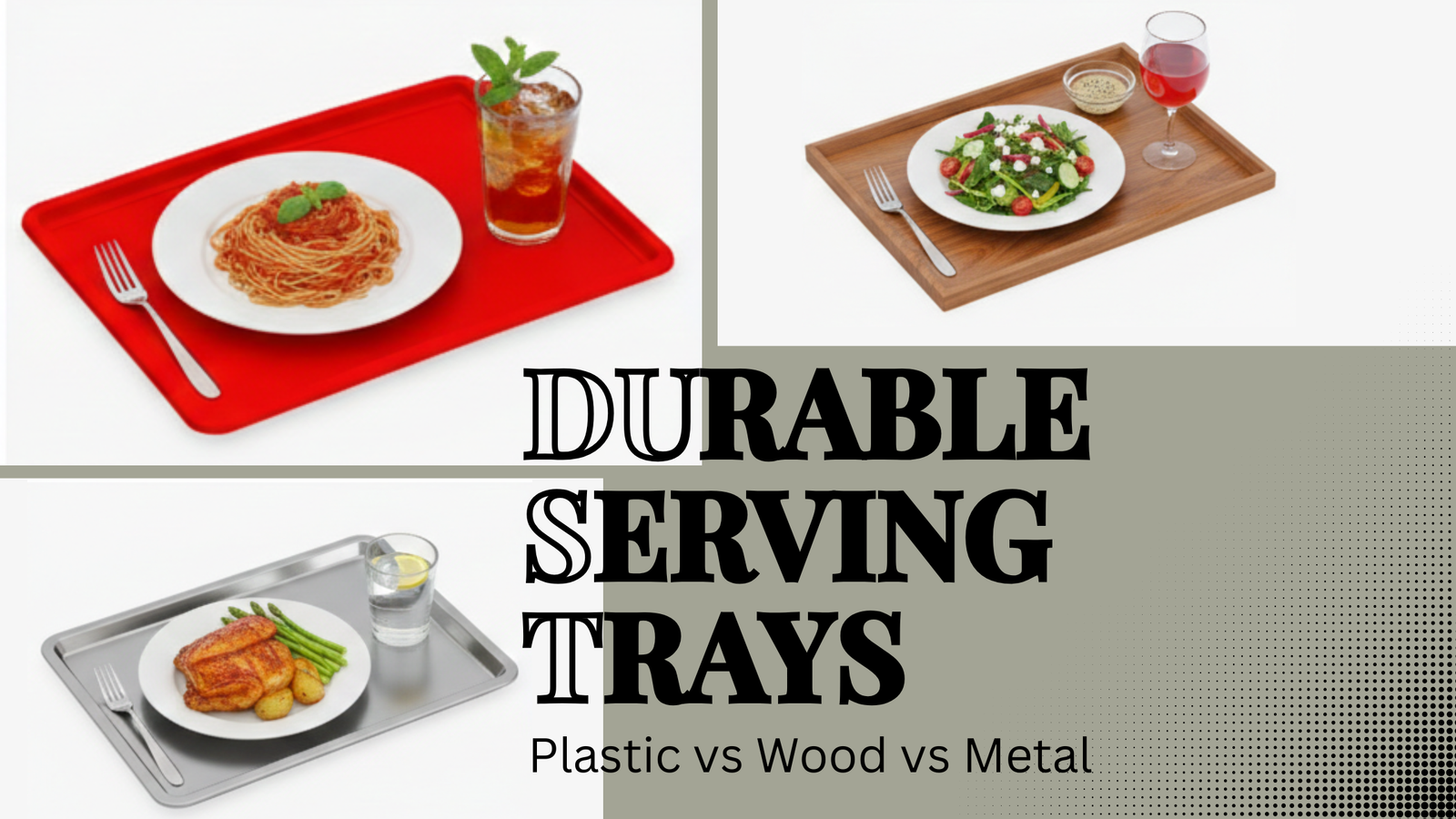
Durable serving trays are designed to withstand frequent use while safely carrying food and drinks. In practical terms, durability depends on material strength, resistance to moisture and heat, ease of cleaning, and suitability for everyday UK household conditions. Plastic, wood, and metal trays each meet these requirements differently.
For UK consumers, the choice often comes down to how the tray will be used: daily family meals, entertaining guests, outdoor serving, or commercial-style durability. A melamine tray, for example, offers impact resistance and low maintenance, while a wooden tray prioritises aesthetics and warmth. Metal trays, meanwhile, excel in long-term structural strength.
This guide compares plastic, wood, and metal serving trays in a clear, factual way. It explains durability, cost, maintenance, and real-world performance so you can decide which option best fits your home, lifestyle, and serving needs in 2026.
Quick Answer: Which Serving Tray Is Most Durable?
- Plastic and melamine trays offer the best impact resistance and low maintenance.
- Wooden trays are durable when sealed properly but require more care.
- Metal trays provide long-term structural strength but can dent or scratch.
- For everyday UK household use, plastic trays balance durability and practicality.
- Outdoor or high-traffic use favours plastic or metal over wood.
What Makes a Serving Tray Durable?
A durable serving tray must handle repeated loading, cleaning, and exposure to moisture without warping or cracking. Key durability factors include:
- Material strength and flexibility
- Resistance to water and heat
- Surface wear over time
- Weight-bearing capacity
- Maintenance requirements
In the UK, where humidity and frequent washing are common, moisture resistance and surface integrity are particularly important.
Plastic Serving Trays: Practical and Impact-Resistant
Why Plastic Trays Are Considered Durable
Modern plastic serving trays especially melamine trays are engineered for toughness. They are widely used in homes, cafés, and catering settings due to their resilience.
Advantages
- Resistant to cracking and chipping
- Lightweight yet strong
- Non-porous and water-resistant
- Easy to clean
Limitations
- Can scratch over time
- Not suitable for microwave use
Melamine is regulated for food safety in the UK and EU. Guidance on safe food-contact plastics is provided by the Food Standards Agency:
https://www.food.gov.uk/
Wooden Serving Trays: Natural but Maintenance-Dependent
How Durable Are Wooden Trays?
A wooden tray can be durable when made from hardwoods such as oak or bamboo and sealed correctly. However, durability depends heavily on care.
Advantages
- Strong load-bearing capacity
- Natural, premium appearance
- Good grip due to texture
Limitations
- Sensitive to moisture
- Requires oiling or sealing
- Can warp if soaked
Wooden trays are best suited for dry serving and decorative use rather than frequent washing. UK consumers often choose them for indoor entertaining rather than daily utility.
Metal Serving Trays: Strong but Less Forgiving
When Metal Trays Make Sense
Metal trays typically stainless steel or aluminium offer high structural strength and long lifespan.
Advantages
- High load tolerance
- Resistant to moisture
- Easy to sanitise
Limitations
- Can dent if dropped
- Heavier than plastic
- May scratch surfaces
For hygiene-focused environments, stainless steel aligns with food service standards outlined by the British Standards Institution:
https://www.bsigroup.com/en-GB/standards/
Plastic vs Wood vs Metal: Durability Comparison
| Feature | Plastic / Melamine Tray | Wooden Tray | Metal Tray |
| Impact Resistance | High | Medium | Medium |
| Water Resistance | High | Low–Medium | High |
| Maintenance | Low | High | Low |
| Weight | Light | Medium | Heavy |
| Typical Lifespan | 5–8 years | 4–7 years | 8–12 years |
For most households, plastic trays provide the best balance of durability and convenience.
Cost Comparison in the UK (2026)
| Tray Type | Typical Price Range |
| Plastic / Melamine Tray | £8 – £20 |
| Wooden Tray | £15 – £40 |
| Metal Tray | £20 – £60 |
Plastic trays remain the most accessible option for everyday use, especially for families and shared households.
Considerations for UK Homeowners
Climate and Moisture
UK kitchens experience regular humidity. Plastic and metal trays are unaffected, while wood requires careful drying to prevent swelling.
Cleaning Habits
Frequent washing favours plastic or metal. The National Health Service recommends thorough cleaning of food-contact items to reduce contamination risk:
https://www.nuffieldtrust.org.uk
Storage Space
Lightweight plastic trays stack more easily, which benefits compact UK kitchens.
For more advice, see our Buying Guide on durable kitchen essentials.
Pros and Cons Summary
Plastic / Melamine Trays
Pros: Durable, lightweight, affordable
Cons: Scratches over time
Wooden Trays
Pros: Attractive, sturdy
Cons: High maintenance, moisture sensitivity
Metal Trays
Pros: Long lifespan, hygienic
Cons: Heavier, dent-prone
Internal Resources on Buzztrove
To support informed decisions, consider reading:
- Buying Guide for durable kitchen accessories
- everyday serving solutions for UK homes
- low-maintenance kitchenware options
- family-friendly kitchen essentials
These guides complement your choice of durable serving trays.
Frequently Asked Questions (FAQ)
1. Which serving tray material lasts the longest?
Metal trays typically last the longest due to structural strength. However, plastic trays offer excellent durability for everyday use with lower maintenance.
2. Is a melamine tray safe for food?
Yes. Melamine trays approved for food contact are safe when used correctly. They should not be microwaved or exposed to very high heat.
3. Are wooden trays durable enough for daily use?
They can be, but only with proper care. Frequent exposure to water reduces lifespan, making them less practical for daily washing.
4. Do plastic trays crack easily?
High-quality plastic trays are impact-resistant. Cracking is rare unless exposed to extreme heat or heavy impact.
5. Are metal trays suitable for home use?
Yes, but they are heavier and may scratch surfaces. They are better for serving heavier loads.
6. Which tray is best for outdoor use?
Plastic trays perform best outdoors due to moisture resistance and lighter weight.
Final Thoughts
Durable serving trays differ significantly by material. For most UK households, plastic and melamine trays provide the most practical combination of durability, affordability, and ease of care. Wooden and metal trays serve more specific needs but require trade-offs in maintenance or handling.
For expert-led kitchen comparisons and buying advice, explore more guides at https://buzztrove.com and choose solutions that match how you serve, clean, and store every day.