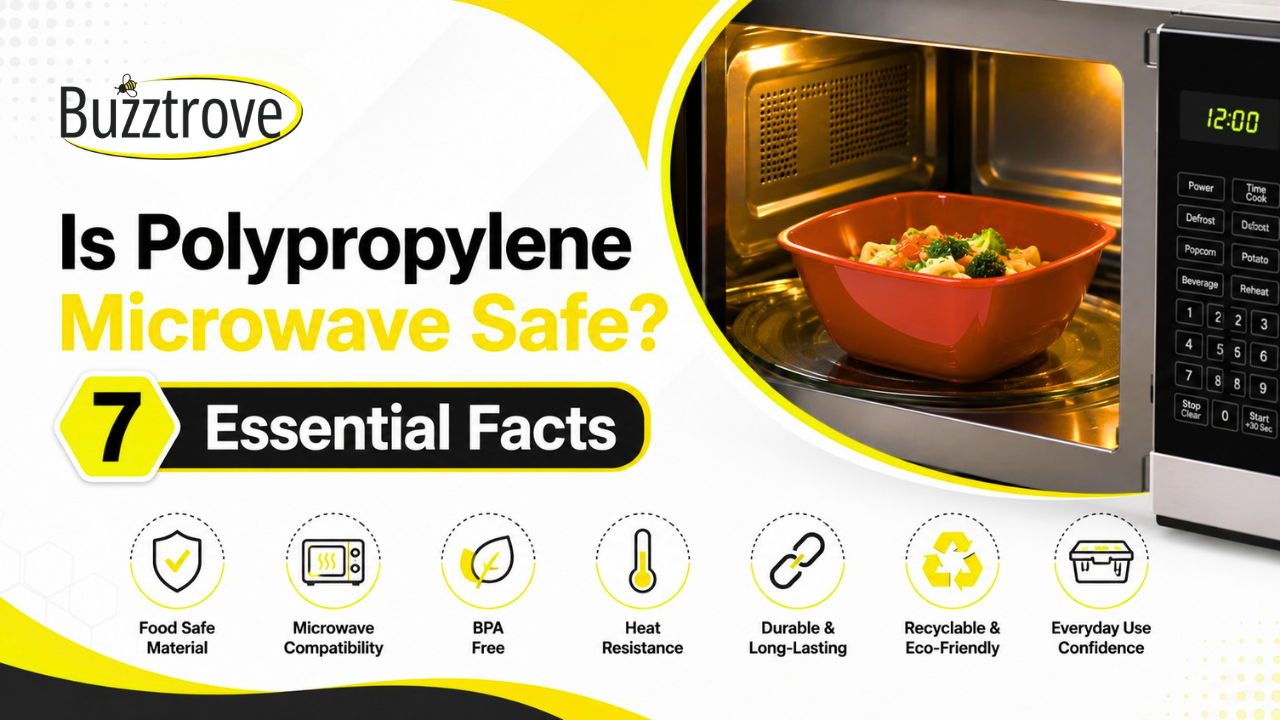
Yes, polypropylene is microwave safe. PP #5 plastic is officially recognised by food safety authorities as one of the few plastics safe for microwave use. It does not leach harmful chemicals when heated, making it the go-to material for families who want practical, durable kitchenware. Melamine, by contrast, should never go in a microwave it releases formaldehyde when exposed to heat. If you’re choosing between the two, polypropylene wins every time for microwave use.
Q&A: Your Top Questions Answered
Q: Is polypropylene microwave safe for reheating food every day? Yes. Polypropylene is rated for repeated microwave use. It does not warp or leach at normal reheating temperatures (up to approximately 120°C). It is one of the safest plastic options for daily use.
Q: How do I know if my plastic is polypropylene? Look for the recycling symbol with the number 5 inside (PP #5) on the base of the item. All Buzz Trove plates, bowls, and cups carry this marking.
Q: Is melamine microwave safe? No. Melamine is not microwave safe. When heated, melamine-formaldehyde resin can leach formaldehyde into food. It should only be used for cold or room-temperature serving.
What Is Polypropylene (PP #5)? Food Safety Facts
Polypropylene is a thermoplastic polymer produced from propylene monomer. It is classified as resin code #5 under the international plastic identification system. Among all plastic types, PP #5 is consistently regarded as one of the safest for food contact.
The UK’s Food Standards Agency (FSA) approves polypropylene for use in food packaging and kitchenware. It is BPA-free by nature unlike polycarbonate (#7) plastics, it never contained bisphenol A in the first place. This makes polypropylene microwave safe without any need for special coatings or treatments.
Key properties of PP #5:
- Heat tolerance up to 160°C (short-term exposure)
- Does not absorb odours or stains easily
- Resistant to most household chemicals and detergents
- Dishwasher safe on normal cycles
- Lightweight yet highly impact resistant
All products in the Buzz Trove shop are manufactured from food-grade PP #5 polypropylene, making them suitable for both microwave reheating and dishwasher cleaning.
Why Polypropylene Is the Safest Plastic for Microwaves
Not all plastics belong in the microwave. When heated, many plastic types release chemical compounds into food — a process called leaching. The risk depends heavily on the plastic resin type.
Here’s how the main plastic types compare:
- PP #5 (Polypropylene): Safe for microwave use. Stable structure at microwave temperatures. Does not leach BPA or phthalates.
- HDPE #2: Generally considered safe but not always rated for microwave use.
- PET #1: Safe for single use only; can leach antimony compounds if reheated.
- PVC #3: Never microwave safe releases chlorine-based compounds when heated.
- Polystyrene #6: Not microwave safe leaches styrene into fatty foods.
- Polycarbonate #7: Historically contained BPA; avoid entirely for hot food.
Polypropylene microwave safe performance is consistent because its polymer chains remain stable at the temperatures generated inside a standard household microwave (typically 60–100°C). This stability is why food containers, baby bottles, and medical-grade equipment are routinely made from PP #5.
According to the European Food Safety Authority (EFSA), polypropylene is among the approved materials for food contact at elevated temperatures. The NHS recommends checking packaging symbols before microwaving any plastic container — and PP #5 consistently passes that test.
Melamine vs Polypropylene: The Critical Microwave Difference
Melamine is a popular choice for colourful, rigid kitchenware it looks and feels like ceramic but is lighter and less fragile. However, it has one major, non-negotiable flaw: melamine is not microwave safe.
Melamine is made by combining melamine resin with formaldehyde. When exposed to microwave radiation and heat, this bond can weaken, releasing traces of formaldehyde and melamine compounds into food. Studies published by the US FDA have confirmed that melamine migration into food increases significantly at high temperatures.
The key differences at a glance:
| Feature | Polypropylene (PP #5) | Melamine |
|---|---|---|
| Microwave Safe | ✅ Yes | ❌ No |
| Dishwasher Safe | ✅ Yes | ⚠️ Top rack only |
| BPA-Free | ✅ Yes | ✅ Yes |
| Chemical Leaching Risk | Very low | Risk at high heat |
| Impact Resistance | High | Moderate |
| Weight | Lightweight | Heavier |
For families who microwave leftovers daily, the choice is clear. Polypropylene microwave safe kitchenware like the Buzz Trove Dinner Plates Set of 4 gives you the colourful, durable look of melamine with none of the heat-related risks.
How to Identify Microwave-Safe Plastic: The Label Guide
Before putting any plastic in the microwave, check the base for these symbols:
Look for:
- A microwave icon (wavy lines) indicates the item is tested and approved for microwave use
- Recycling symbol with #5 inside confirms the material is polypropylene
- “PP” printed on the base confirms polypropylene construction
Avoid:
- No symbol at all do not microwave
- Recycling symbols #3, #6, or #7 not microwave safe
- “Melamine” text anywhere on the product never microwave
Every item from Buzz Trove carries the PP #5 marking and microwave-safe icon. This includes the Plastic Serving Bowls Set of 4, Unbreakable Plastic Cups, and Serving Trays.
The UK Plastics Pact and WRAP guidelines advise consumers to prioritise reusable PP #5 items as a more sustainable choice both for safety and for reducing single-use plastic waste.
Is Polypropylene Safe for Children?
This is one of the most common questions parents ask, and the answer is reassuring. Because polypropylene microwave safe plastic contains no BPA, no phthalates, and no formaldehyde it is widely used in baby feeding products, toddler cups, and school lunchboxes across the UK.
Unlike older plastic formulations, food-grade PP #5 undergoes strict EU and UK testing before reaching consumers. The European Chemicals Agency (ECHA) classifies polypropylene as non-toxic and non-carcinogenic under normal use conditions.
For families with young children, choosing PP #5 kitchenware means:
- Safe for warming food in the microwave
- No risk of sharp ceramic shards if dropped
- Easy to clean and sanitise in the dishwasher
- Lightweight enough for children to handle safely
Explore the full range of child-friendly, polypropylene microwave safe kitchenware at Buzz Trove’s shop.
Frequently Asked Questions (FAQ)
Q1: Is polypropylene microwave safe at all power levels? Yes. PP #5 is stable across standard microwave power levels (600W–1000W). For very long heating times (over 5 minutes continuously), allow a brief pause and check for heat build-up in the food rather than the container.
Q2: Can polypropylene go in the dishwasher? Yes. Polypropylene is fully dishwasher safe. Use the normal cycle — high-temperature cycles above 70°C may cause minor warping over many years of repeated use.
Q3: Does polypropylene plastic leach chemicals into hot food? Under normal use conditions, no. PP #5 does not leach BPA, phthalates, or other harmful chemicals at microwave temperatures. This is confirmed by EFSA and FSA guidelines.
Q4: How is PP #5 different from regular plastic? “Regular plastic” can refer to dozens of resin types. PP #5 specifically refers to polypropylene, which has a higher heat tolerance and better food safety profile than plastics like polystyrene (#6) or PVC (#3).
Q5: Can you put polypropylene in the freezer? Yes. PP #5 handles freezer temperatures well without becoming brittle. It is suitable for freezer storage and microwave reheating in the same container.
For more on Buzz Trove’s unbreakable kitchenware range, visit buzztrove.com or contact us with any questions.